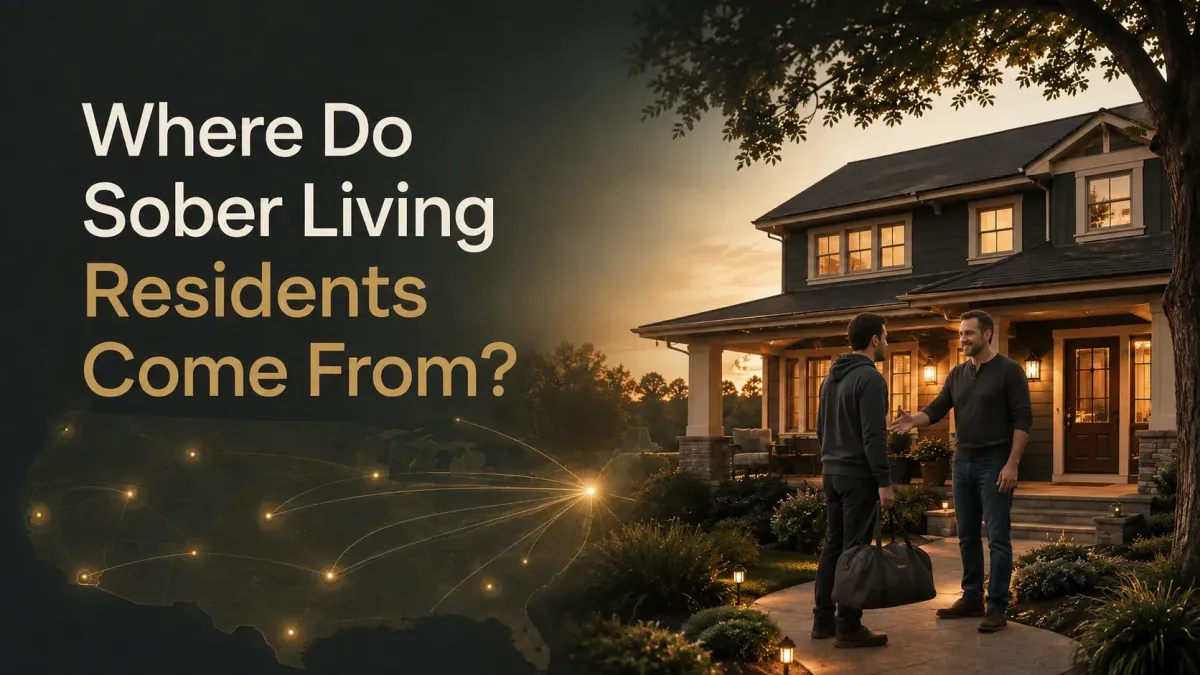
Where Do Sober Living Residents Come From? How Good Homes Stay Full
Most sober living residents come through referrals from treatment centers, detox facilities, hospitals, clinicians, courts, probation departments, families, and other community organizations. The homes that stay full become known as reliable places to send the right person when a bed is needed.
This is one of the first questions new operators ask, and it’s the right question. A furnished house doesn’t create demand. A website doesn’t make discharge planners trust you. Even a city with a serious shortage of recovery housing won’t automatically send residents to a home nobody knows.
The demand may already exist, but the operator still has to connect that demand to the right beds.
Most residents are already connected to someone who can refer them
People rarely wake up, search for a random sober living home, and choose one without help. Many are leaving treatment, detox, a hospital, or the criminal justice system. Others are working with a therapist, case manager, peer-support specialist, or family member who is helping them decide what comes next.
SAMHSA’s national best-practices guide says people are commonly referred to recovery housing by clinicians, criminal justice professionals, law enforcement, treatment providers, family members, and other community partners. Those referral sources aren’t simply looking for an empty bed. They’re trying to place a real person into a home that fits.
That distinction matters because sober living referrals aren’t ordinary sales leads. A treatment center may send the same home many residents over time, but only after the home proves that it communicates clearly, treats residents well, and does what it says it will do.
What referral partners need to know about a home
A referral source needs enough information to decide whether your home is appropriate. The exact questions vary, but the decision usually comes down to a few practical facts.
- Who the home serves
A women’s home, a men’s home, a home for parents with children, and a home that accepts medication for opioid use disorder may serve very different people.
- What the home requires
Referral partners need to understand the house expectations, admissions criteria, and whether a prospective resident can realistically succeed there.
- What a bed costs and how payment works
A perfect clinical fit still falls apart if the resident can’t afford the home or doesn’t have an available funding source.
- Whether the operator is dependable
People remember the home that answers, explains the next step clearly, and doesn’t create a mess for the person making the referral.
NARR certification can help establish credibility in states with active affiliates, because it signals that a residence follows recognized recovery-housing standards. Certification doesn’t replace relationships, though. Referral partners still need to know the operator and understand how the home actually runs.
A referral relationship is worth more than a one-time inquiry
Online inquiries can fill an occasional bed. A strong local relationship can fill beds for years.
Imagine a discharge coordinator who helps dozens of people each month. When that coordinator trusts your home, understands whom you serve, and knows you’ll respond, your home becomes part of the short list. The next referral doesn’t begin with a new Google search. It begins with someone remembering that you were useful the last time.
That’s why the healthiest homes don’t treat outreach as a launch task they can abandon once the first beds fill. Relationships need attention. Staff changes, programs change, and new organizations open. Operators who stay connected are easier to remember when someone needs housing today.
Choose the demand before you choose the property
A lot of first-time operators reverse the order. They lease or buy a house, fill it with furniture, and only then ask where the residents will come from. By that point, the rent is due and every unanswered message feels urgent.
We teach the opposite order in our demand-first process. Learn what your market needs, decide whom the home should serve, and begin building local referral relationships before committing to a new property. You’re not trying to collect promises for beds that don’t exist. You’re trying to learn whether the home you’re considering would solve a problem people in your area already have.
Andrew explains how those relationships affect occupancy and day-to-day operations in this long-form conversation about running a sober living home well.
That early work may reveal that your first idea needs to change. Perhaps your area has plenty of men’s housing but almost no options for women with children. Maybe local providers need homes that accept a particular medication. Maybe the price point you planned doesn’t match how residents in that market actually pay for sober living. Finding that out early is useful. Finding it out after signing a lease is expensive.
Where the F.A.S.T. Framework fits
Knowing that relationships matter is the easy part. Building enough of the right relationships, staying organized, and turning those conversations into a dependable referral network requires a repeatable process.
That’s what our F.A.S.T. Framework is built to do. Sober Living Riches members start with a research base covering more than 600 areas and over 24,000 organizations, then use our process to identify the right local contacts and build trust with them. If an area hasn’t been researched yet, our team creates a fresh list for that location.
We don’t publish the list, templates, timing, or full outreach process because those are part of the implementation members receive. The principle is public and simple: prove the demand through real local relationships before you spend heavily on the house.
Sources and further reading
Want to see how the referral-first model works?
Watch Andrew Lamb’s free training on starting and filling a sober living home.
Watch the Free TrainingThis article is educational and is not legal, clinical, or financial advice. Recovery-housing requirements and referral practices vary by location.