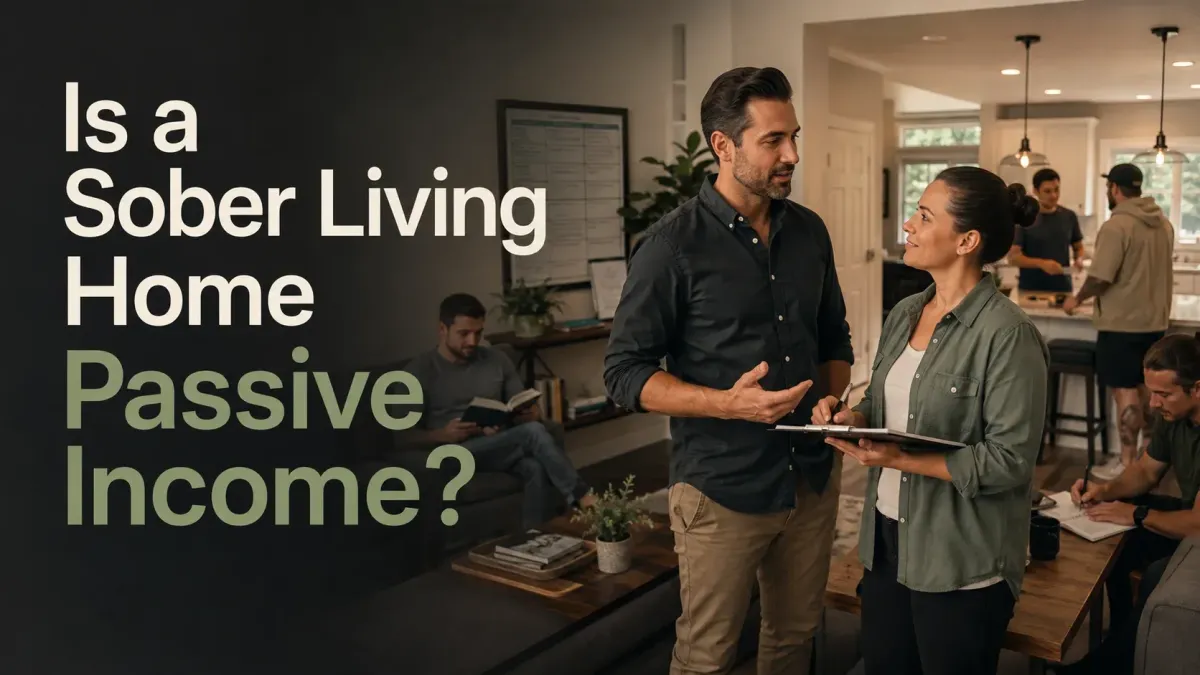
Is a Sober Living Home Passive Income? What the Work Actually Looks Like
A sober living home isn’t hands-off, at least not at the start. Like buying a rental or starting any business, there’s real work up front. Once the home is stable, strong systems and a capable manager can reduce the operator’s day-to-day involvement.
Some people hear “real estate” and picture rent arriving while someone else handles everything. Sober living can become manager-run, but treating it as passive from day one is a quick way to disappoint residents and referral partners.
The home serves people in recovery. Someone has to protect the standards, respond to problems, communicate with the organizations making referrals, and make sure the property remains a safe place to live.
The work is heaviest before and around opening
Before the first resident moves in, the operator has to understand the local market, choose the right population, confirm the property works, arrange insurance, prepare the documents, furnish the home, and begin building referral relationships.
Filling the beds is also active work. Our systems and processes have been proven to help members build local referral relationships quickly, but a process still has to be followed. The operator or a trusted team member has to create those relationships and keep them current.
That work becomes easier once people know the home and trust the operator. It doesn’t become unnecessary.
What someone has to manage after residents move in
- Admissions and communication
Prospective residents need screening, clear expectations, and a reliable path into the home.
- Daily house operations
Rules, meetings, chores, conflicts, safety, and practical household issues need consistent attention.
- Property and finances
Rent collection, utilities, repairs, supplies, insurance, and records don’t manage themselves.
- Referral relationships
Partners need updates, accurate availability, and confidence that the home remains dependable.
The house manager changes the operator’s role
A capable house manager can handle much of the daily activity inside the home. The manager may lead house meetings, communicate expectations, watch for concerns, coordinate routine needs, and tell the operator when something requires a bigger decision.
That allows the owner to spend less time on small daily issues and more time on oversight, finances, property decisions, and referral relationships. Some people in our community like running their homes and stay hands-on. Others get the operation stable, hand daily responsibility to a manager, and check in on a limited schedule.
You decide how involved you want to be once the home is built, but the decision has to match the quality of the systems and the person running them.
Manager-run doesn’t mean owner-absent
The operator remains responsible for the home even when someone else handles the day. You still need visibility into occupancy, payments, incidents, maintenance, resident concerns, and staff performance.
A useful test is simple: if the manager left tomorrow, would the home still have clear documents, current records, referral relationships, and a repeatable way to operate? If everything lives in one person’s head, the business isn’t systemized yet.
Good delegation creates freedom because the work is clear. It doesn’t create freedom by pretending the work disappeared.
Think active first, flexible later
Sober living can give an operator more flexibility than a job tied to one location and one schedule. It can also become a business that runs through a team. The route to that flexibility begins with active involvement, strong standards, and systems another person can actually follow.
If you want something completely passive from the beginning, this probably isn’t the right model. If you’re willing to build it well and then choose which responsibilities to keep, sober living can become far less dependent on your daily presence over time.
Related guides
Want a clear picture of what operators actually build?
Watch the free training from Andrew Lamb and see how the model works.
Watch the Free TrainingThis article is educational. Staffing, oversight, and operating requirements vary by home and location.